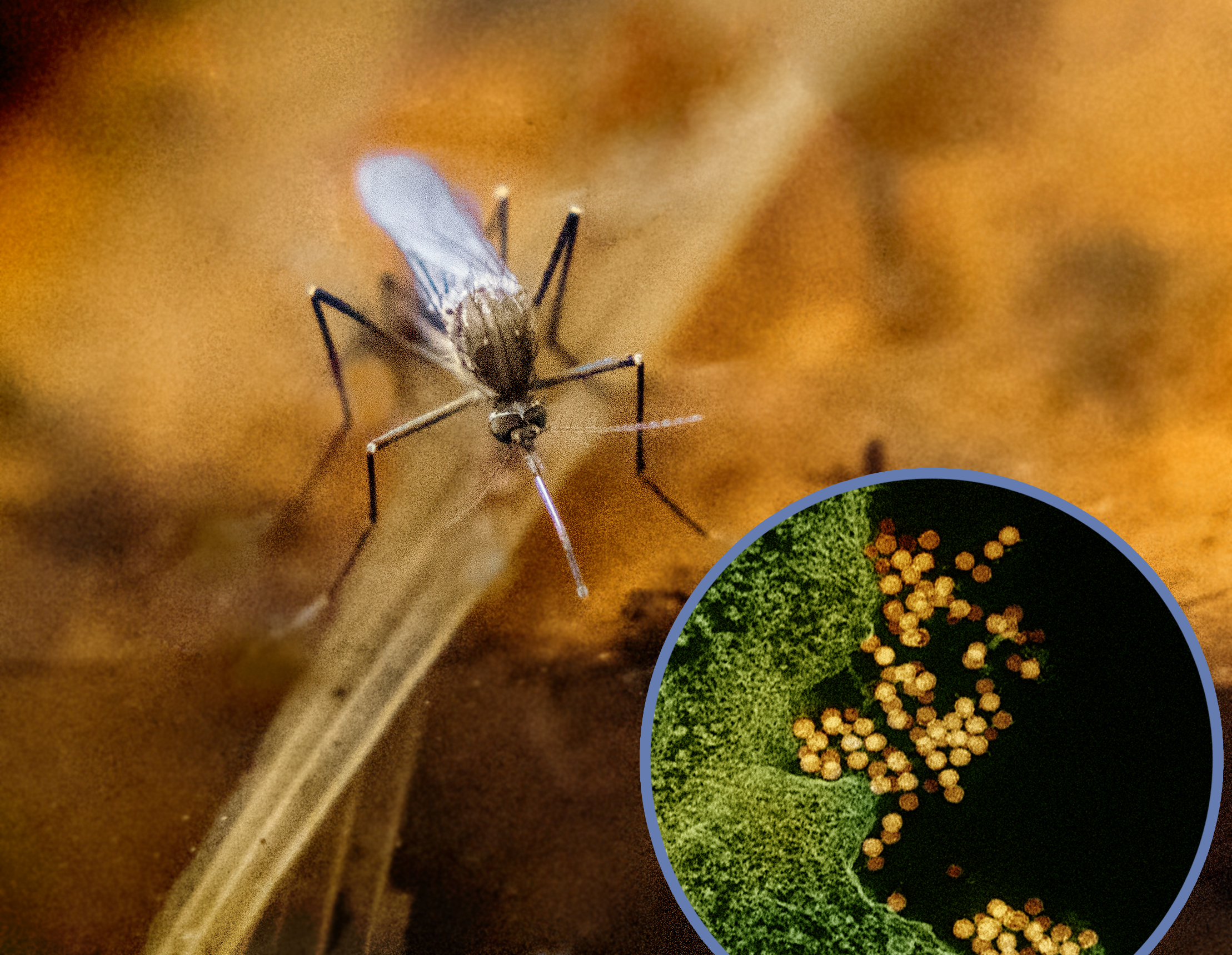
Needham and Dedham remain at moderate risk for West Nile virus as Massachusetts confirms its sixth human case of the year.
Norfolk County is one of 12 counties where 250 cities and towns carry the moderate designation, according to the Massachusetts Department of Public Health (DPH). Eleven municipalities closer to Boston, including Newton, now carry a high-risk rating.
The DPH announced the sixth case on Sept. 3, involving a man in his 70s who was likely exposed in Suffolk County. His symptoms began Aug. 26, and he developed encephalitis, an inflammation of the brain. All six confirmed cases this season have involved elderly men in Suffolk and Middlesex counties.
Statewide, 273 mosquito samples have tested positive for West Nile virus (WNV) since the first positive sample was collected June 16. When we reported on the outbreak Aug. 22, the DPH had confirmed one human case. The count has since grown to six.
EEE detected in 13 mosquito samples
Separately, 13 mosquito samples in Massachusetts have tested positive for Eastern equine encephalitis (EEE) this year. No human or animal EEE cases have been reported. EEE is extremely rare in humans, according to the U.S. Centers for Disease Control and Prevention (CDC). Neither virus has a vaccine or antiviral treatment.
Dedham steps up mosquito control
The Town of Dedham confirmed in August that WNV had been detected in local mosquitoes for the second time this summer. Dedham is working with the Norfolk County Mosquito Control District on weekly sampling, Ultra Low Volume spraying, stagnant water management, catch basin treatment and tire removal through October.
Dedham had one WNV-positive mosquito sample in all of 2025, when 451 of 8,788 samples tested positive statewide, according to a June 30 town notice.
Heat accelerates mosquito activity
Public Health Commissioner Robbie Goldstein said in a Sept. 3 prepared statement that residents should stay vigilant heading into the fall. He urged people to use mosquito repellent, wear clothing that reduces exposed skin and empty anything collecting water outside their homes.
The warning comes after an unusually active mosquito year. July 2026 was the warmest month recorded in the contiguous United States since record-keeping began in 1895, with every state warmer than its 20th-century average, according to National Oceanic and Atmospheric Administration data reported by Patch. Warm weather speeds mosquito development and shortens the time WNV needs to become transmissible inside a mosquito.
People over 50 face a greater risk of severe illness from West Nile, which can cause meningitis or encephalitis. About 1 in 150 infections leads to severe illness, according to the Berkshire Eagle, citing the CDC.
The mosquito season in eastern Massachusetts does not wind down until the first hard frost, around early November in the Boston area. Residents can check current risk levels for their town on the DPH's arbovirus surveillance dashboard at mass.gov/info-details/massachusetts-arbovirus-update or call the Division of Epidemiology at 617-983-6800.