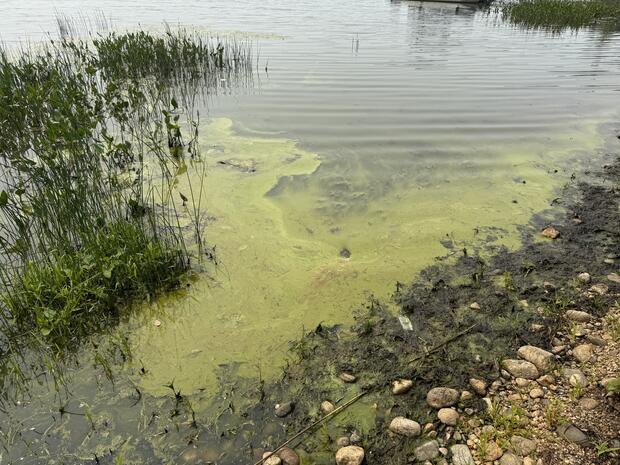
Residents who walk, boat, or let their dogs cool off in the Charles River between Needham and Dedham should stay out of the water entirely, state health officials warned Friday, July 24.
The Massachusetts Department of Public Health issued a formal cyanobacteria harmful algal bloom advisory covering the river from Kendrick Street and Nahanton Street in Needham and Newton to Bridge Street and Spring Street in Dedham and West Roxbury. The stretch includes Millennium Park and Cutler Park Reservation.
The advisory is in effect until further notice, with no scheduled review date announced. Swimming, boating, fishing, and drinking the water are all prohibited. Pet owners must keep animals away from the river, and anyone who does touch the water should rinse off immediately.
What prompted the advisory
The formal advisory follows the death of a dog named Dobby, a 16-year-old pet owned by Elivia Savadier Sagov of West Roxbury. Dobby died Monday, July 20, from liver failure two days after swimming in the river at Millennium Park, according to GBH News. State officials have not confirmed whether cyanobacteria caused the dog's illness or death, saying only that they received a report of a dog dying after "possible exposure" to algal toxins.
DPH officials visited the site Wednesday, July 22, and collected water samples Thursday, July 23. Laboratory results were expected Friday. DPH has not publicly released findings as of the advisory's issuance.
Sagov told GBH News on Wednesday, July 23, that the river water appeared clear when she brought her dogs to Millennium Park, but she later learned from the Charles River Watershed Association about a benthic mat of algae that grows along the river bottom and is not visible from the surface.
"I think year-round educational notices need to be put up, just saying what it is and the ways it shows up and the dangers of it," Sagov told GBH News.
After Dobby's death, Sagov put up hand-written warning signs along the pathway near the canoe dock at Millennium Park and posted on Nextdoor to alert other pet owners.
Health risks
Cyanobacteria, often called blue-green algae, can form harmful blooms in rivers during warm summer weather. Blooms may make water appear murky, resemble pea soup, or create paint-like streaks on the surface. The greatest risk to people and animals comes from swallowing contaminated water, though skin contact and inhaling water droplets may also cause irritation. Exposure to cyanobacteria toxins can damage the liver, kidneys, or nervous system. Children and pets are especially vulnerable because of their smaller body size.
Pet owners whose animals have been near the river should contact a veterinarian immediately if the animal shows vomiting, excessive drooling, loss of coordination, staggering, or seizures.
Signage and contacts
The Town of Dedham posted on its official Instagram account Tuesday, July 21, days before the formal state advisory, that signage would be posted at all access points along the affected stretch. Dedham residents can reach the Dedham Health Department at 781-751-9220.
Needham residents can contact the Needham Public Health Division at 781-455-7940 or [email protected]. MDPH lists cyanobacteria resources at mass.gov/dph/algae.