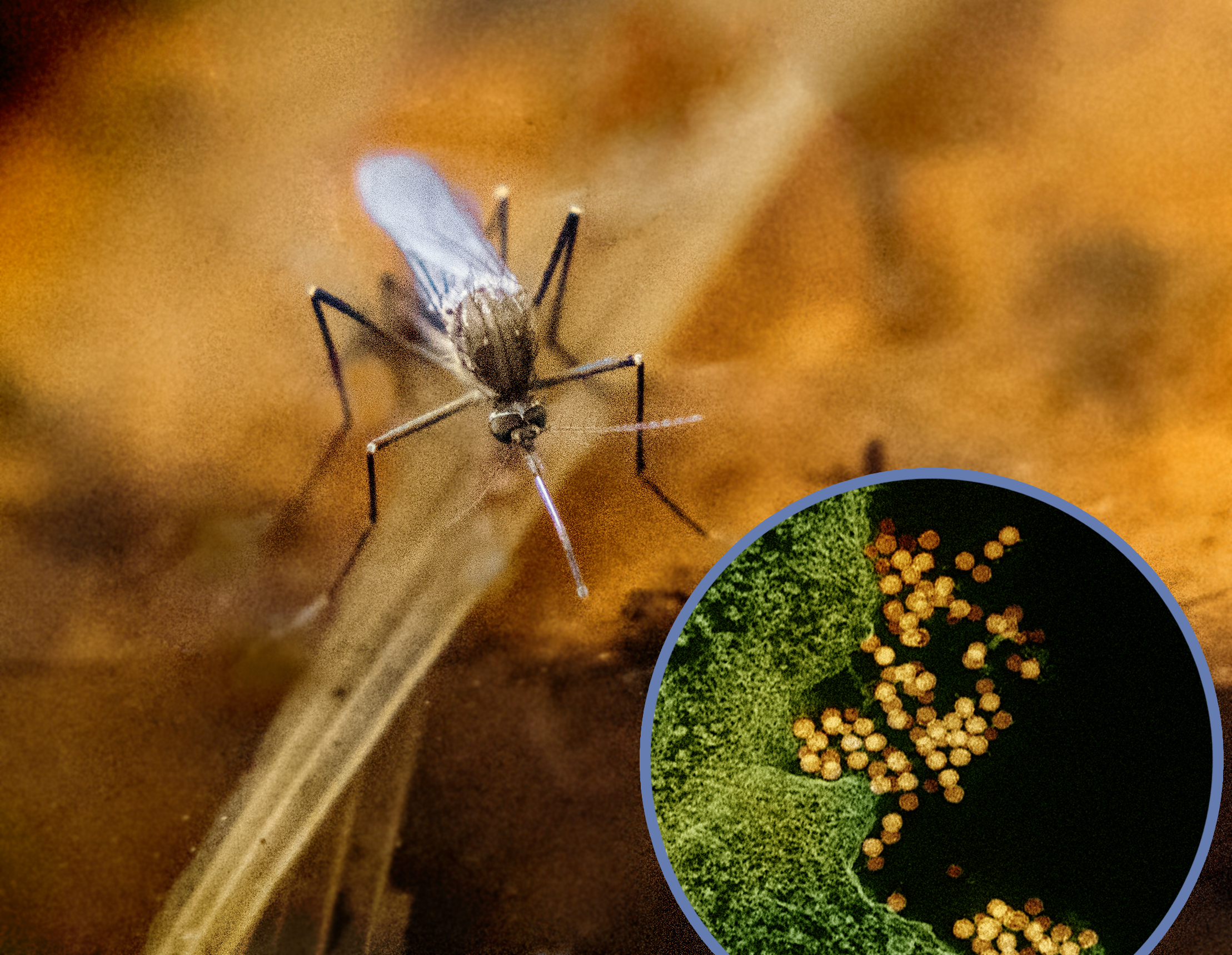
Mosquitoes collected in Dedham have tested positive for West Nile virus for the second time this summer, the town announced Friday, Aug. 21, with the community's risk level listed as moderate in the town's news release.
The Massachusetts Department of Public Health confirmed the second positive sample on Tuesday, Aug. 18. The town's release describes this as the second detection of the summer; the first was reported to have been announced June 30, though the specific date of that initial announcement could not be independently re-confirmed for this story — the closest independently verifiable data point, from a regional news outlet, put an earlier Dedham-area positive sample's collection date at June 24. Statewide, the virus has been found in 180 mosquito samples across every county except Nantucket, according to the Massachusetts Department of Public Health.
The state also reported its first human case of the year on Aug. 20: a man in his 90s who was exposed in Middlesex County. Risk levels have been elevated to moderate in 70 Massachusetts communities, including those in Norfolk County.
Massachusetts Public Health Commissioner Robbie Goldstein said in the Aug. 20 announcement that "West Nile virus can be a devastating disease, especially for those who are older or have compromised immune systems," and urged residents to take precautions before the start of the school year.
What Dedham is doing
The town is working with the Norfolk County Mosquito Control District on weekly mosquito sampling through October, Ultra Low Volume spraying, catch basin treatment, stagnant water management and tire removal, according to the town's news release.
The Dedham Community House summer camp confirmed it receives weekly mosquito control treatments from the district from the start of summer through Labor Day, plus monthly treatments by a licensed pest management company.
How residents can protect themselves
The state health department advises these steps:
- Avoid peak hours. Mosquitoes that carry West Nile virus bite most actively from dusk to dawn. Consider rescheduling outdoor activities during those hours.
- Use repellent. Approved products contain DEET, permethrin, picaridin, IR3535 or oil of lemon eucalyptus. DEET should not be used on infants under two months and should be 30% concentration or less on older children. Oil of lemon eucalyptus is not for children under three. Permethrin goes on clothing and gear only.
- Wear protective clothing. Long sleeves, long pants and socks reduce exposed skin.
- Drain standing water. Empty unused flowerpots, wading pools and clogged rain gutters. Change birdbath water frequently.
- Check screens. Install or repair tightly fitting window and door screens.
People over 50 face higher risk for severe infection.
Residents can track current West Nile virus activity in Massachusetts at www.mass.gov/dph/mosquito.